Pranic Lifestyle
Pure Myrrh Essential Oil
Pure Myrrh Essential Oil
Couldn't load pickup availability
Myrrh Essential Oil — Pure Therapeutic-Grade Aromatherapy
Experience the pure, single-note vibration of Myrrh Essential Oil (Commiphora myrrha) — a steam-distilled from oleo-gum resin sourced directly from Somalia, Oman, Ethiopia, Yemen. Every bottle is small-batch, undiluted, and bottled with care by Pranic Lifestyle, the trusted source for spiritual and therapeutic aromatherapy since the early days of the Pranic Healing community.
About Myrrh Essential Oil
Myrrh is distilled/pressed to preserve its full aromatic profile. Its Warm, earthy, balsamic, slightly sweet, resinous aroma and Pale yellow to amber color are hallmarks of genuine, unadulterated oil. We never dilute, blend with synthetics, or cut with carrier oils — what you get is the pure plant essence, nothing else.
Top Benefits & Uses of Myrrh Oil
- Meditation & prayer
- Skin healing & rejuvenation
- Oral & gum health
- Spiritual protection
How to Use Myrrh Essential Oil
- Diffuse: Add 3–5 drops to your ultrasonic or nebulizing diffuser for an aromatic experience that fills the room in minutes.
- Topical (diluted): Mix 1–3 drops with a teaspoon of carrier oil (jojoba, fractionated coconut, sweet almond) and apply to pulse points, the spine, or the soles of the feet.
- Inhalation: Place 1–2 drops on a tissue, in palms cupped over the nose, or in a personal inhaler for direct respiratory and emotional support.
- Bath: Pre-mix 5–8 drops with a tablespoon of carrier or full-fat milk and add to a warm bath for a full-body aromatic soak.
- Energetic / Pranic use: Apply a single drop to the chakra associated with Myrrh (Root, Heart & Crown) during meditation or pranic healing sessions.
Product Details — Myrrh Essential Oil
- Botanical Name: Commiphora myrrha
- Origin: Somalia, Oman, Ethiopia, Yemen
- Aroma: Warm, earthy, balsamic, slightly sweet, resinous
- Color: Pale yellow to amber
- Extraction Method: Steam-distilled from oleo-gum resin
- Blends Well With: Frankincense, Lavender, Patchouli, Rose, Sandalwood
- Chakra Association: Root, Heart & Crown
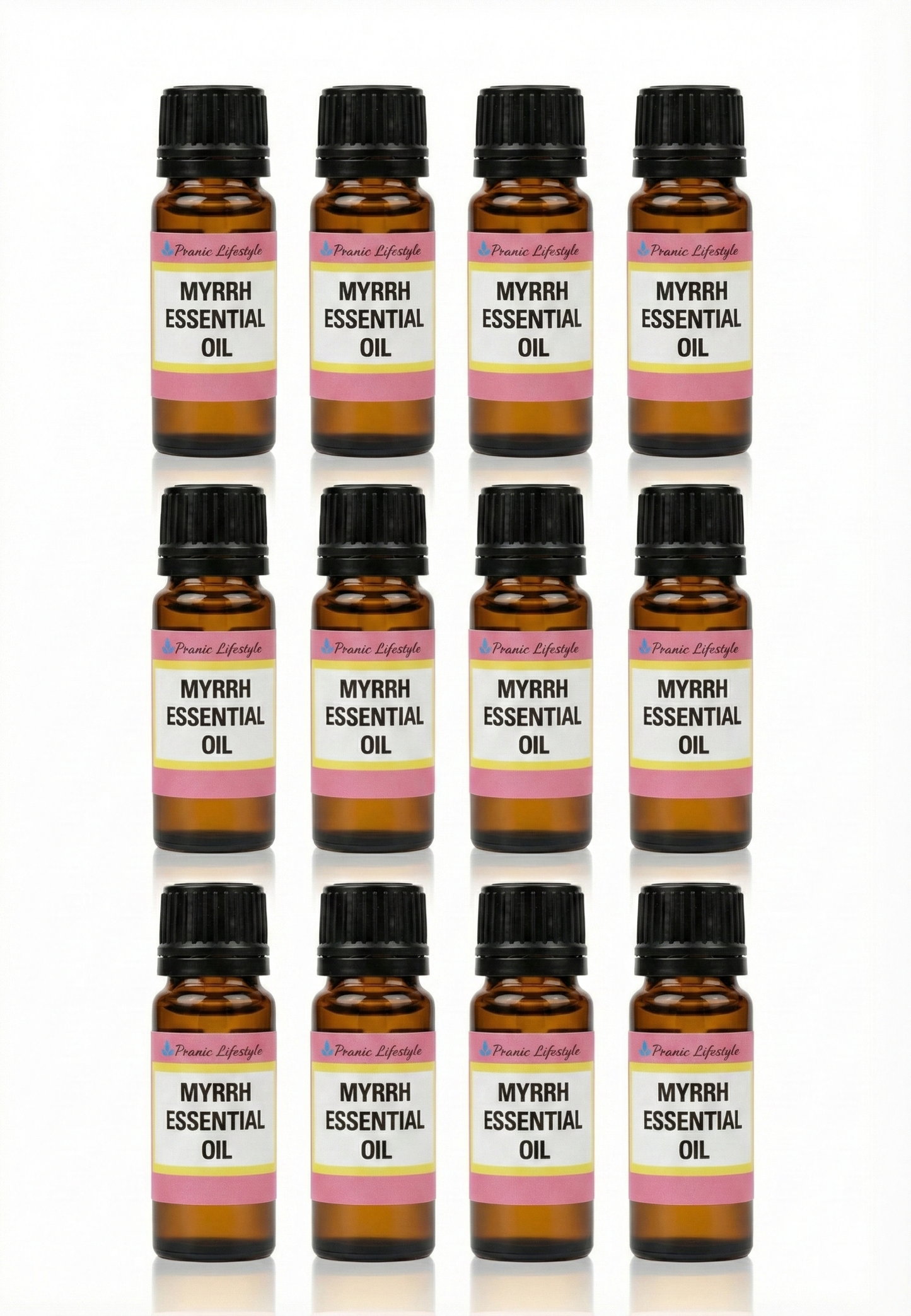
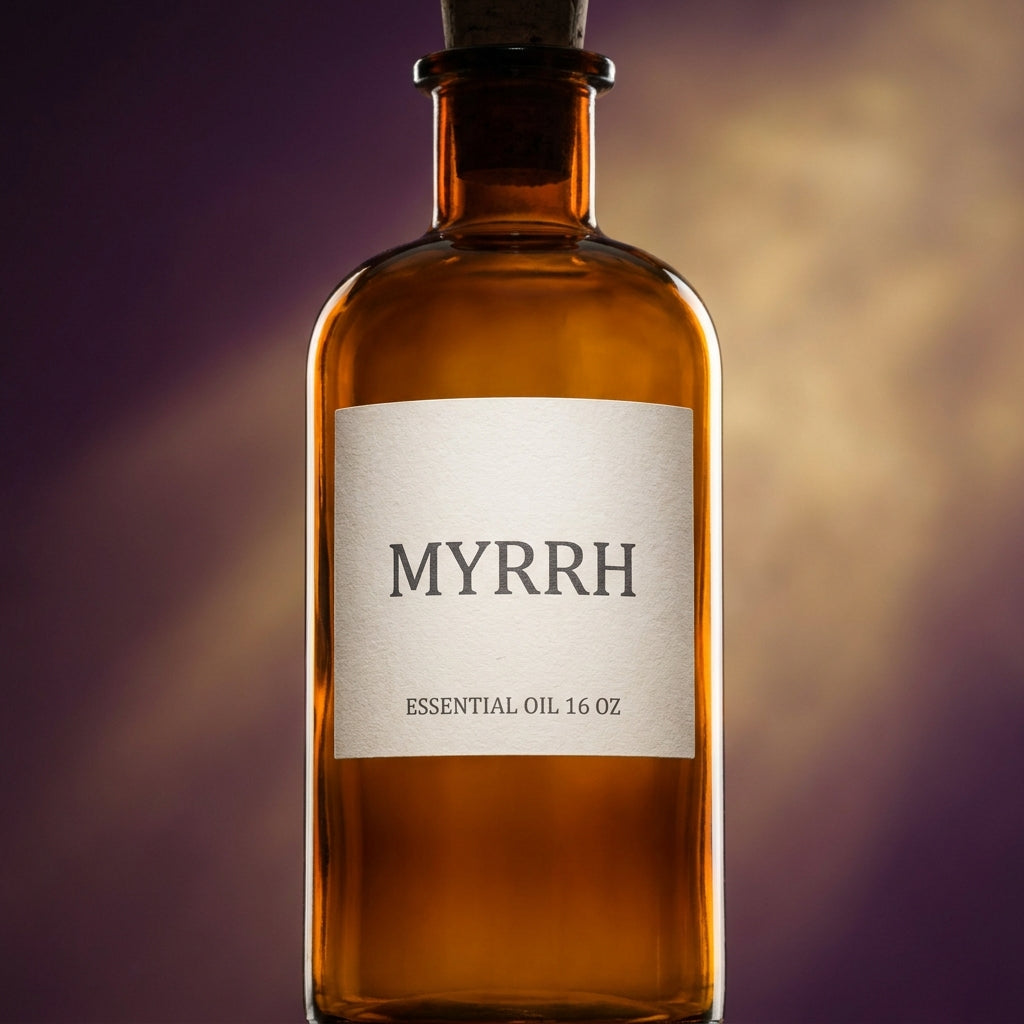
- Size Options: Available in 0.5 oz, 4 oz, 16 oz, and bulk 12-pack cases — perfect for personal use, practitioners, and retail.
Why Choose Pranic Lifestyle's Myrrh Oil?
Pranic Lifestyle is the aromatherapy partner of the Pranic Healing community. Every oil in our line is single-origin, third-party tested for purity, and bottled in dark glass to protect the integrity of the plant essence. We source directly from small distillers who honor traditional steam distillation and ethical wild-crafting. No fillers. No synthetics. No middlemen.
Safety & Storage
For external use only. Always dilute before topical application. Avoid contact with eyes and mucous membranes. Keep out of reach of children and pets. Store in a cool, dark place away from direct sunlight. Discontinue use if irritation occurs. Pregnant or nursing individuals should consult a qualified healthcare professional before use.
Frequently Asked Questions
Is Myrrh essential oil pure? Yes. Every Pranic Lifestyle essential oil is 100% pure, unadulterated, and third-party tested.
Where is Myrrh oil sourced? Somalia, Oman, Ethiopia, Yemen — we work directly with small distillers and ethical wild-crafters.
Can I use Myrrh oil on my skin? Yes, but always dilute with a carrier oil (we recommend jojoba or fractionated coconut) at a 1–3% dilution rate for adults.
Do you ship internationally? We ship within the United States and select international destinations. Bulk case sizes (12-pack) save the most on per-bottle cost.
These statements have not been evaluated by the Food and Drug Administration. This product is not intended to diagnose, treat, cure, or prevent any disease.
Share