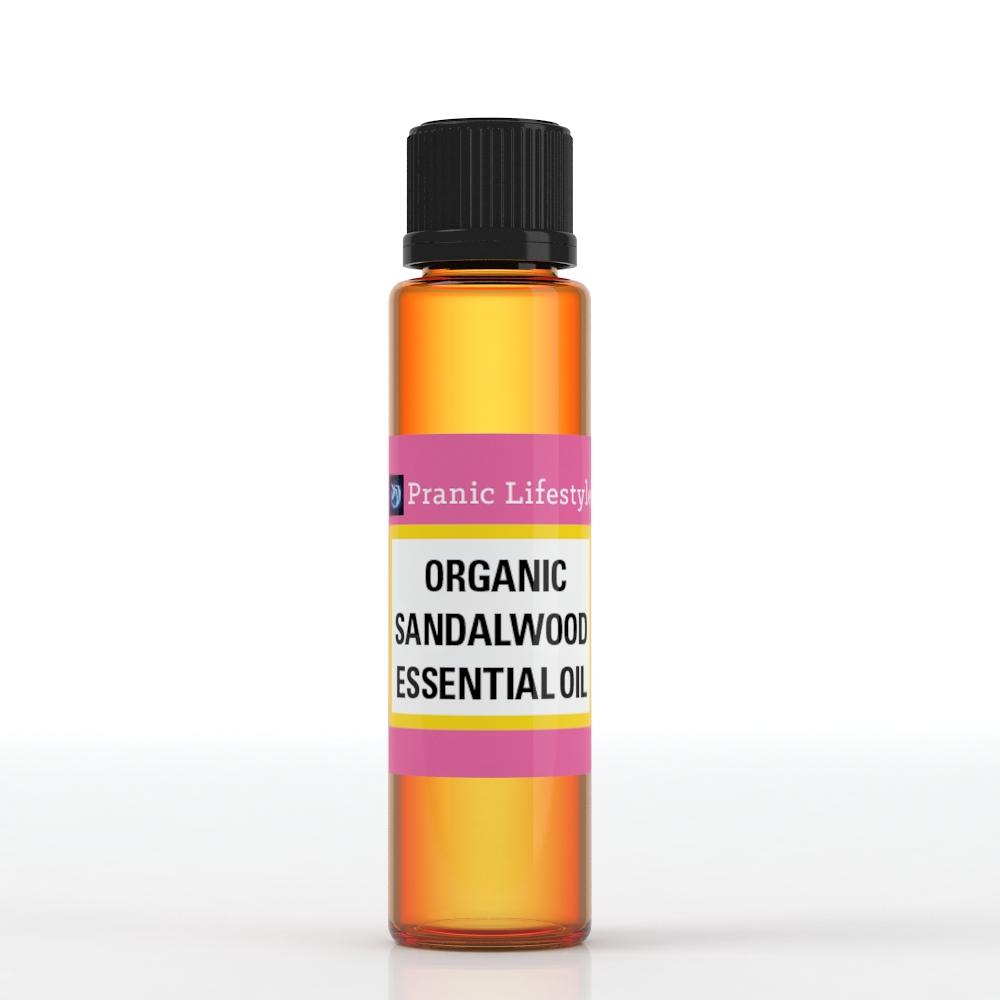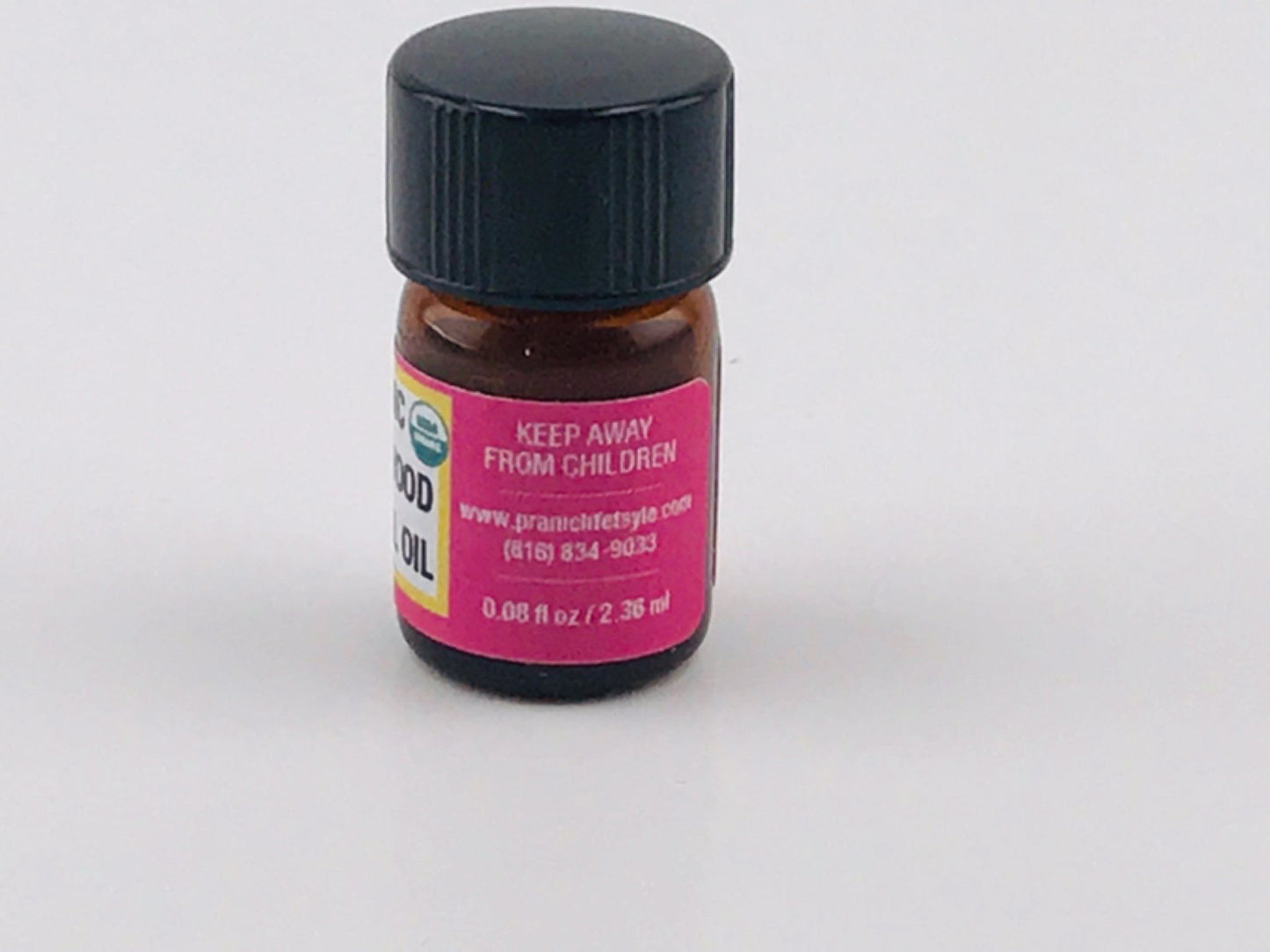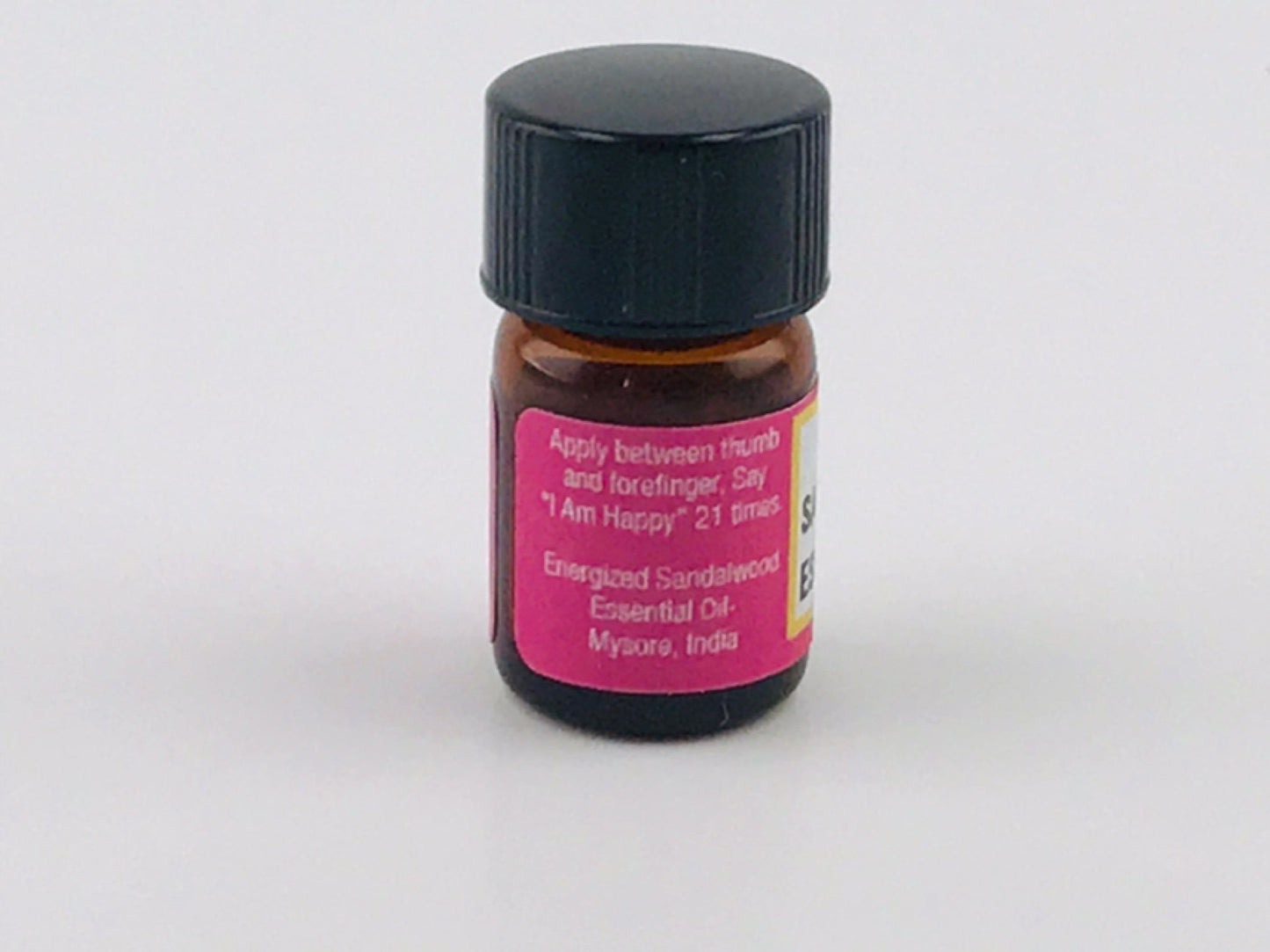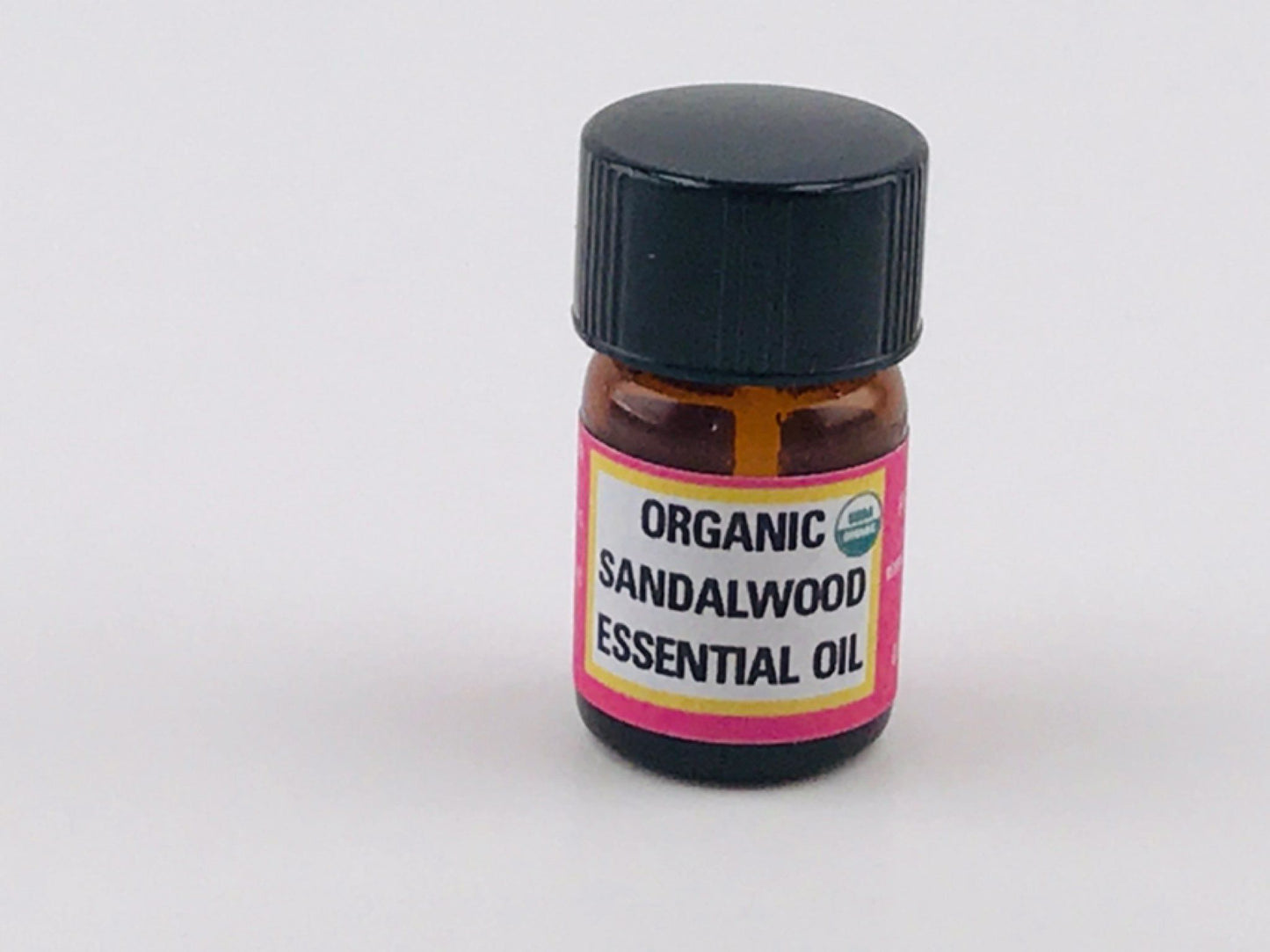
Pranic Lifestyle
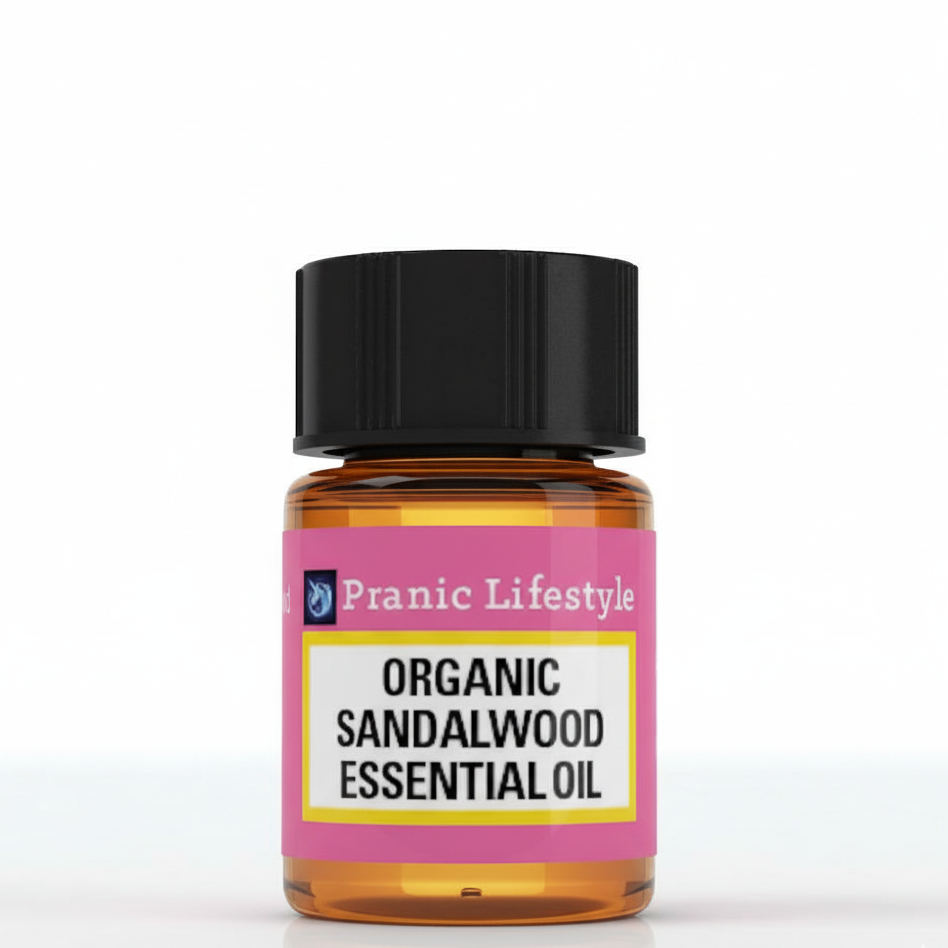
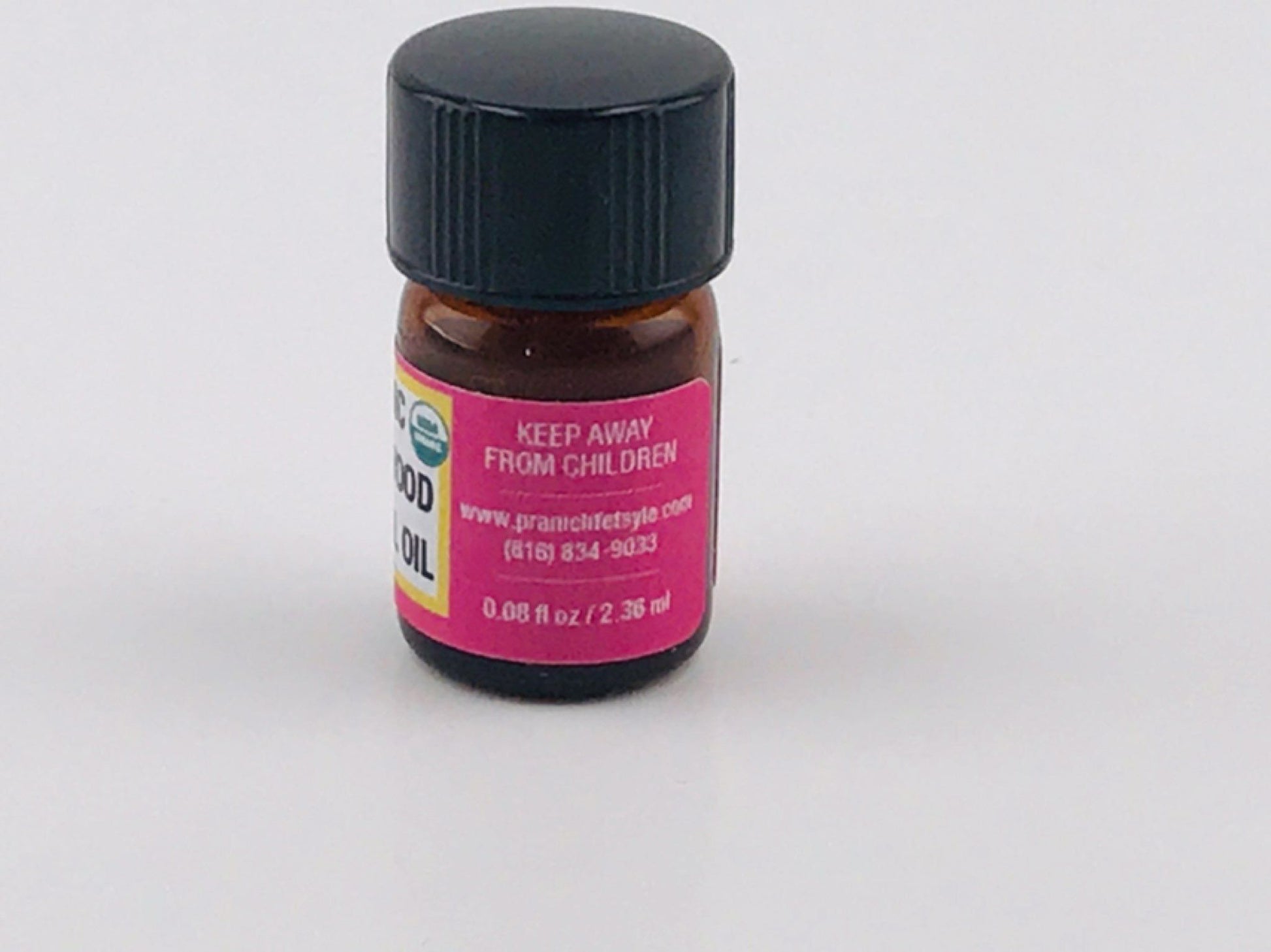
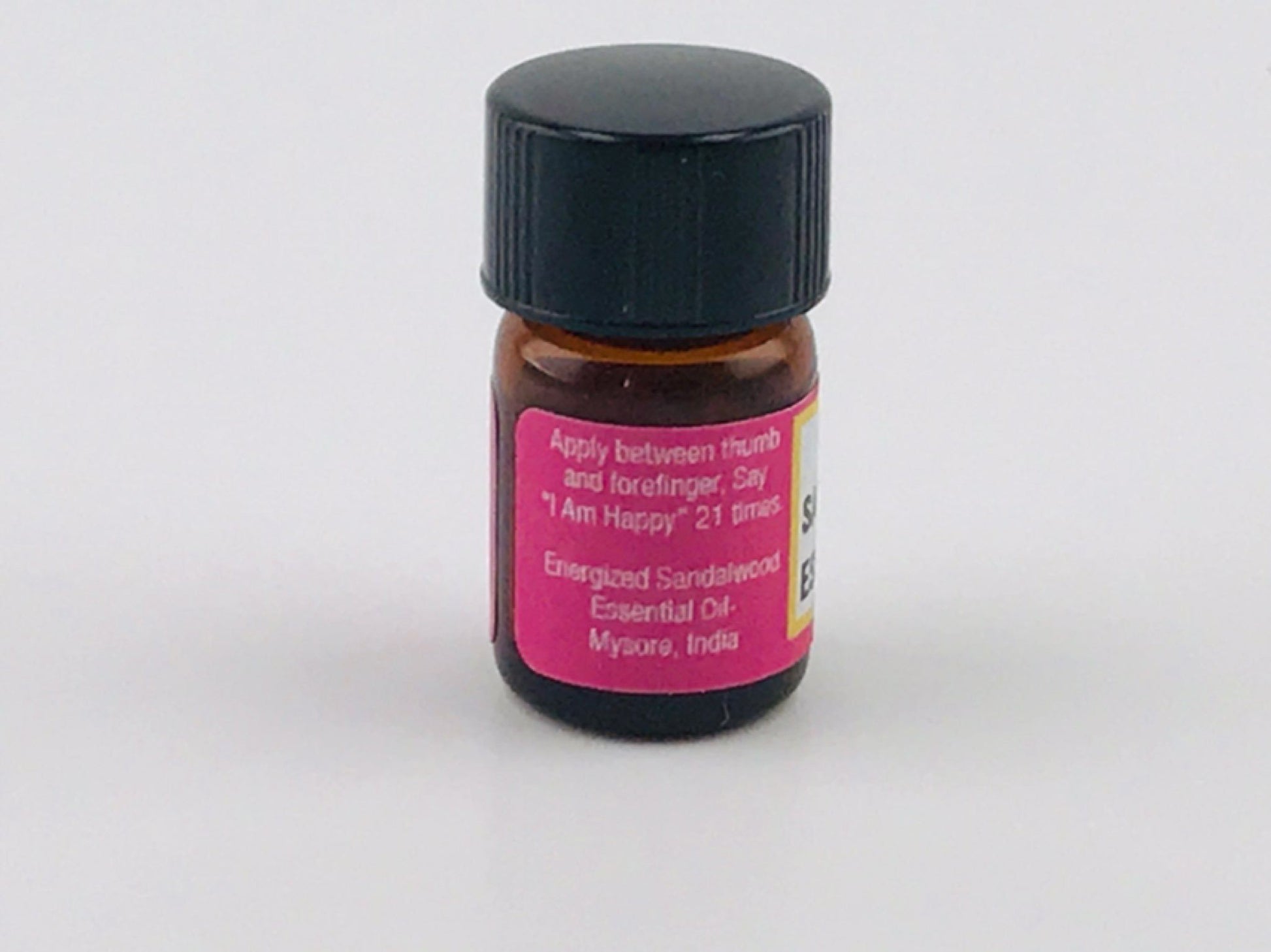
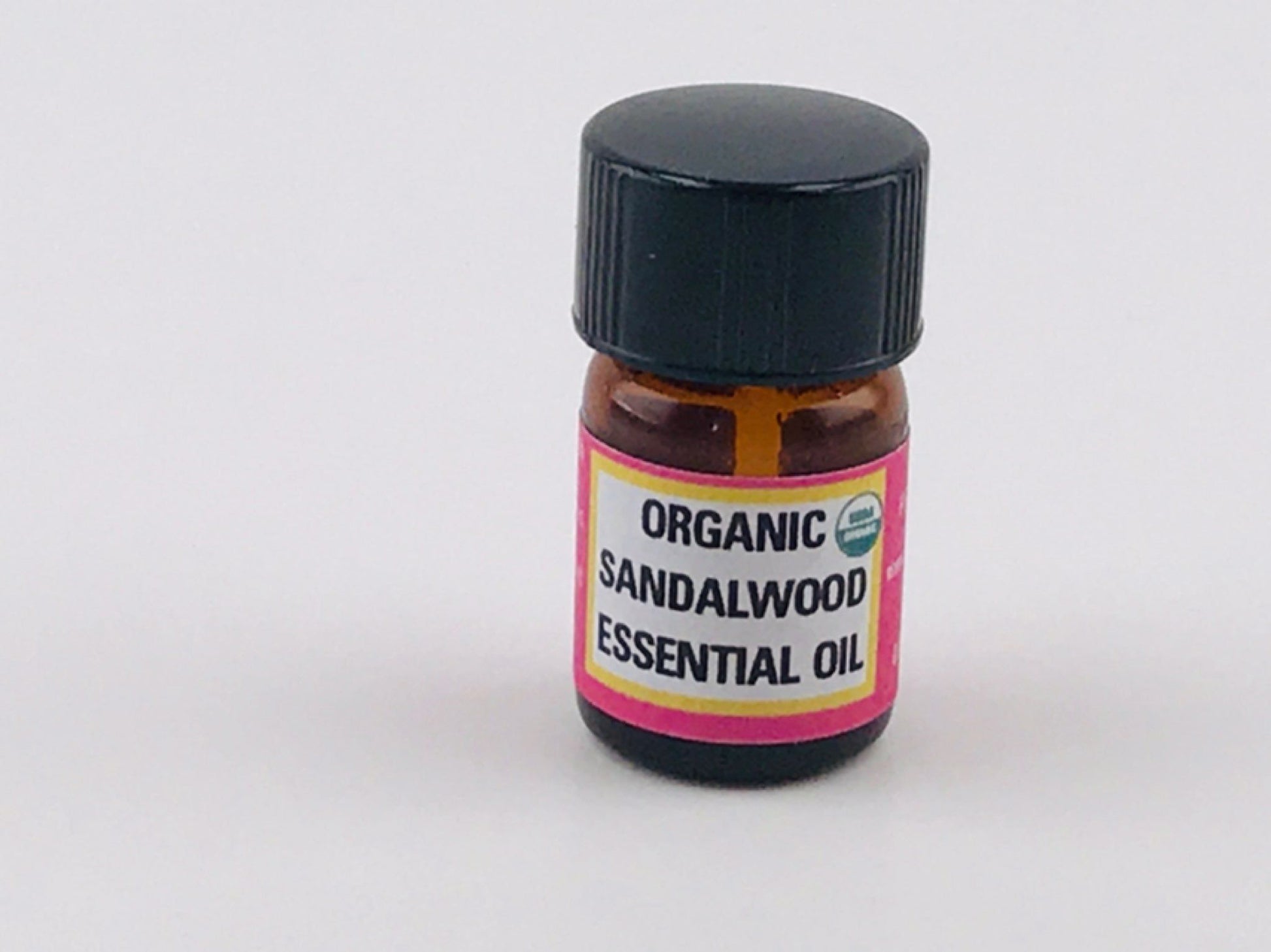
Pure Australian Sandalwood Essential Oil
Pure Australian Sandalwood Essential Oil
Couldn't load pickup availability
Pranic Lifestyle · Signature Single Note
Australian Sandalwood
The Quiet Master
Steam-distilled from the heartwood of Santalum spicatum — sustainably wild-harvested in Western Australia. Long used in the Pranic Healing tradition, with specific applications described in Master Choa Kok Sui's teachings. One single note, complete.
Australian sandalwood oil · Rocky Patel · Pranic Lifestyle
The Oil
The Quiet Master
Australian Sandalwood (Santalum spicatum) is steam-distilled from the heartwood of trees that have grown in the semi-arid regions of Western Australia for what is conservatively estimated at 30,000 years — the Santalum genus appears in the fossil record of that continent long before the rise of the genus Homo. The tree is a slow hemiparasite, drawing its life from host roots in the ground, taking fifteen years or more to accumulate the aromatic heartwood that produces this oil.
What you smell is not a single molecule but a layered chord of more than one hundred sesquiterpene compounds working together. The result is a fragrance unlike any other in the plant kingdom: rich, warm, woody, soft, slightly creamy, with a depth that holds in a room for hours after the bottle is closed. It is the smell of meditation halls and ritual fires, of the resin burned across continents for thousands of years.
The Pranic Lifestyle line carries it in the same single-origin, uncut form — nothing added, nothing removed, nothing blended away.
From the Outback
Sustainably harvested, ethically sourced
Western Australia is the heart of the global Australian sandalwood industry. The commercial harvest is built on a regulated plantation model, developed in partnership with Aboriginal landowners, private operators, and conservation scientists. Strict quotas, replanting requirements, and ethical wild-harvesting programs mean that today the Australian supply of Santalum spicatum is one of the most sustainably managed botanical industries in the world.
The lineage runs deep. The Aboriginal peoples of Western Australia have used sandalwood for at least 30,000 years. Master Choa referenced this in his Pranic Healing materials when he described the use of sandalwood in meditation: "Sandalwood has been used for meditation and spiritual purposes for thousands of years by the aborigine medicine men of Australia, sages and yogis of India." The oil in this bottle is the same species those traditional practitioners worked with — the same plant, the same terroir, the same generational knowledge of how the heartwood is to be harvested and distilled.
The Pranic Lifestyle line sources exclusively from licensed Western Australian plantations and ethical Aboriginal community harvests. We maintain the full chain of custody from the harvest permit to your medicine cabinet, and we work only with small distillers who honor traditional steam distillation. The two largest plantation operators in Western Australia — TFS (now Quintis) and Santanol — manage the bulk of the sustainable supply, with smaller Aboriginal-owned operators contributing to the ethical-wild segment of the market.
The Pranic Colorations
Green, pink, and golden
Master Choa Kok Sui taught that all essential oils carry pranic colorations. For sandalwood, his specific teaching was green prana:
"Sandalwood contains lots of green, pink, and golden energy, can be used on bottom of the feet and on the heart chakra and crown. It helps expand the heart energy centers and is a reputed love oil. Sandalwood is referenced many times in The Kama Sutra manual."
— Rocky Patel, on the Pranic Lifestyle YouTube channel.
Beyond the pranic colorations, Master Choa also taught the following uses for sandalwood, all part of the standard Pranic practice:
- The salt-and-sandalwood basin for Twin Hearts meditation — a few drops of sandalwood oil in a basin of salt water, feet in the basin during the practice, extracts contamination from the chakras and the aura. The salt draws dirty energy downward; the sandalwood flushes the aura. This is the most common sandalwood protocol in the Pranic tradition.
- Spray and on-hands for disintegrating dirty energy — a water-and-sandalwood solution used in space cleansing where sage or palo santo cannot be burned.
- Three drops in the salt bath for a deep spiritual cleansing effect.
- Calming. Master Choa described sandalwood as effective for its dirty-prana cleansing effect and noted that it is "very calming."
Modern research is beginning to map what the Pranic tradition has long held. The pineal gland, a small structure at the geometric center of the brain that the Pranic tradition associates with the activation of higher vision, has been the subject of contemporary research suggesting that sandalwood's sesquiterpene fraction interacts with the oxygenation of the pineal region. On the Pranic Lifestyle YouTube channel, Rocky Patel teaches that the "blue pearl" — the small energetic center in the forehead associated with the ajna chakra — can become activated when smelling sandalwood oil. This is a working hypothesis drawn from two distinct traditions, not a clinical claim.
The Chemistry
A chord of more than one hundred compounds
What gives sandalwood its unmistakable signature is a family of sesquiterpene alcohols centered on alpha-santalol. Santalum spicatum contains more than ninety percent of beneficial chemical compounds classified as sesquiterpenes — the family of molecules that give the oil both its depth and its anti-inflammatory, antimicrobial, and neuroprotective properties. The two key alcohol markers are alpha-santalol and beta-santalol, supported by a wider profile of farnesol, nuciferol, lanceol, and epi-alpha-bisabolol.
Why this matters to you. The next time someone hands you a "sandalwood oil" without telling you the species, the alpha-santalol percentage, or the source region, they are handing you a mystery. Pure Australian sandalwood tests at the ranges below. Anything significantly off those numbers is either cut, blended with cheaper oils, or wholly synthetic.
Typical Australian sandalwood (S. spicatum) composition
| Compound | Range (%) |
|---|---|
| (Z)-α-santalol | 15 – 25 |
| (Z)-β-santalol | 5 – 20 |
| epi-α-bisabolol | 2 – 12.5 |
| (Z)-α-trans-bergamotol | 2 – 10 |
| (E,E)-farnesol | 2.5 – 15 |
| (Z)-α-nuciferol | 2 – 15 |
| (Z)-lanceol | 1 – 10 |
| epi-β-santalol | 0.5 – 3.5 |
Indicative composition ranges per published chromatographic data for S. spicatum heartwood oil.
Key chemical components in plain English
- α-Santalol — the compound responsible for the light, woody aroma. The primary carrier of the calming influence. Documented in laboratory studies as anti-inflammatory and antimicrobial.
- β-Santalol — present in slightly lower concentrations. Contributes the deeper, creamy, and slightly animalic aromatic undertones. Carries cleansing and purifying properties.
- (E,E)-Farnesol — a sesquiterpene alcohol contributing to the antimicrobial and anti-inflammatory profile. Also a documented fragrance allergen at higher concentrations.
- α-Bisabolol — a soothing compound also found in chamomile. Provides the skin-calming effect that makes Australian sandalwood a gentle oil for facial application.
The Adulteration Economy
Why a "bargain" sandalwood is never a bargain
Sandalwood is one of the most systematically faked essential oils on the market. Independent laboratory testing of commercial "sandalwood" oils has repeatedly found the majority off-label — replaced with cheaper botanicals such as Amyris balsamifera, cut with synthetic diluents like benzyl benzoate, or wholly relabeled synthetic mixtures designed to mimic the aroma. The honest way to verify what is in a bottle is to ask the supplier for a current gas chromatography report and to compare the alpha-santalol and beta-santalol percentages against the published ranges for the species on the label.
The common adulterants are predictable:
- Amyris balsamifera (West Indian sandalwood) — a completely different botanical from a different family. Contains beta-eudesmol, not alpha-santalol. Cheap, woody, but not sandalwood.
- Copaifera (Copaiba) and Cedrus atlantica (Atlas cedarwood) — woody oils with similar tones, used to stretch the volume.
- Castor oil and fractionated coconut oil — cheap carrier oils that thin the perceived strength.
- Benzyl benzoate, diethyl phthalate — synthetic diluents.
- Synthetic sandalwood analogues — javanol, polysantol, ebanol. Created in a lab to smell like the real thing. They don't carry the same compounds and they don't carry the frequency.
The single test you can run yourself. Real sandalwood oil, applied to a tissue and held up to the light, leaves an even, transparent, very pale yellow film that dries down without residue. Synthetic sandalwood leaves a waxy, sometimes shiny residue. The aroma on the dry-down is the real test — a genuine oil develops new facets 15-30 minutes after application; a synthetic one flattens into a single chemical note.
In Pranic Practice
The grounding oil
Sandalwood is associated in the Pranic tradition with the heart chakra and the crown chakra, as Master Choa taught. The foundational use in the Pranic tradition is the salt-and-sandalwood basin before meditation, as Master Choa specifically recommended. His direct teaching on the practice, as recorded in the Pranic Healing materials: "Use a few drops of sandalwood with salt and water while doing Twin Hearts Meditation. This pulls out contamination from the body. It also has super flushing out effect of dirty energy."
The salt-and-sandalwood basin — the foundational Pranic protocol. Add three to five drops of pure sandalwood oil to a basin of warm water in which a generous handful of fine sea salt has been dissolved. Sit comfortably, place the feet in the basin, and proceed with the Twin Hearts meditation or with any other pranic or meditative practice. The salt draws dirty energy downward through the feet; the sandalwood's prana flushes the aura and refills the depleted centers. The basin is then discarded (do not reuse the water). This is the foundational Pranic practice involving sandalwood oil, and it is the one Master Choa recommended personally. Sandy or cracked feet are not a contraindication — the salt can sting, in which case reduce the salt concentration.
Two additional specific uses for sandalwood appear in the Pranic tradition:
- Meditation — where its grounding frequency supports the practitioner in holding the crown open without losing the body. Diffuse 3-5 drops in a standard diffuser for the room before sitting.
- Energetic cleansing of a space — where its woody, slightly resinous character helps stabilize a room after a healing session. Spray a water-and-sandalwood solution into the corners of the room.
The Crown Stabilizer protocol
A simple 90-second practice that pairs Australian sandalwood with a single drop of rose for the heart. Use before meditation, before sleep, or before any session that requires your full attention.
Place a single drop on a clear quartz or rose quartz
Or your receiving hand. The stone method is the classical Pranic approach — quartz amplifies the field.
Hold the stone against the crown of your head
Close to the fontanelle if you are familiar with that placement, or just above the top of the skull. Breathe slowly for one minute. Notice the stillness that gathers behind your eyes.
Place the same stone against the heart center
One minute. The crown opens; the heart answers.
Return the stone to its place
Sand it lightly under running water, then air-dry.
Broader Applications
Skincare, sleep, perfumery, and the body
Skincare and dermatological use
The alpha-bisabolol and santalols in sandalwood have been used topically for centuries. In modern practice:
- Mildly astringent — helpful for balancing skin tone without stripping the moisture barrier.
- Acne management — the antimicrobial fraction (alpha-santalol and farnesol) makes sandalwood a candidate for targeted facial application on blemished skin. Use at 1% dilution in jojoba or a non-comedogenic carrier.
- Mature, dry, or reactive skin — sandalwood is one of the gentler essential oils for daily facial use. A single drop added to a serum or facial oil at bedtime is a low-risk way to introduce it into a routine.
Sleep, stress, and nervous-system support
Sandalwood is a heavy base note with immense staying power. In a diffuser, the aroma persists in a room for hours — significantly longer than most other oils. This makes it well suited as a wind-down signal: diffuse 3-5 drops in the bedroom 30 minutes before sleep. Master Choa described sandalwood as "very calming" in his teaching on the oil. (This is experiential reporting, not a clinical claim. Individual results vary.)
Natural perfumery
Sandalwood is one of the foundational materials in natural perfumery for two reasons. First, it is a base note with extraordinary staying power on the skin, which means it anchors the lighter, more volatile top and middle notes (bergamot, lemon, jasmine, ylang ylang) so the fragrance lasts hours longer than it would otherwise. Second, it is one of the rare natural materials that functions as a fixative — it slows the evaporation of the more volatile oils around it, which is why most natural perfumes that claim to last all day contain sandalwood as the base.
Sandalwood blends exceptionally well with:
- Floral middle notes — jasmine, rose, ylang ylang (the classical combination for evening perfume)
- Other woody bases — cedarwood, vetiver, patchouli (for grounding masculine or unisex compositions)
- Bright top notes — bergamot, lemon, grapefruit, pink pepper (for opening the composition with lift)
- Resinous and balsamic materials — frankincense, myrrh, benzoin, labdanum (for depth and warmth)
The Kama Sutra, the ancient text on love and the art of living, references sandalwood extensively as an anointing oil and as a fragrance for the body and the bedchamber. Master Choa included this lineage in his Pranic teaching on the oil. A single drop on the inner wrists or at the base of the throat is a quiet, generous gesture of presence.
How to Use
Six ways to work with this bottle
1 · Salt-and-sandalwood basin (the foundational Pranic protocol)
Three to five drops in a basin of warm salt water. Place the feet in the basin before Twin Hearts meditation or any pranic practice. The salt draws dirty energy downward; the sandalwood flushes the aura. Discard the water after the session.
2 · Diffuse — the foundational use
Three to five drops in an ultrasonic diffuser fills a standard room within minutes. Diffuse for the room, not for the practitioner. Sandalwood settles a space, softens emotional static, and supports the crown-chakra frequency of anyone sitting in it.
3 · Meditation & pranayama
One drop on a quartz stone, held at the crown for 60-90 seconds before sitting. Especially supportive for breathwork, Vipassana, and the longer forms of meditation where the mind tends to drift.
4 · Pre-session room cleanse
Diffuse for 15-20 minutes before any Pranic healing session, meditation group, or spiritual practice. The woody-dry character helps clear residual energy without the smoke of sage or palo santo.
5 · Topical (diluted)
One to three drops in a teaspoon of jojoba or fractionated coconut. Apply to the crown, the third eye, the soles of the feet, or the wrists. Standard dilution for adults is 1-3% (6-18 drops per ounce of carrier oil). For facial use, 1% is sufficient.
6 · Sandalwood room spray
Combine 10 drops sandalwood, 5 drops lavender, 5 drops frankincense, and 2 oz distilled water in a dark glass spray bottle. Shake before each use. Spray into the corners of the room and over the practitioner space after any session. This is the standard smoke-free alternative to smudging.
Product Details
What's in the bottle
Botanical Name
Santalum spicatum
Common Name
Western Australian Sandalwood
Origin
Semi-arid regions of Western Australia — Carnarvon, Wheatbelt, Goldfields harvest zones
Plant Part
Heartwood and rootball (the aromatic core of the mature tree)
Extraction Method
Steam distillation — traditional, no chemical solvents, no supercritical CO2
Color & Viscosity
Pale yellow to nearly clear. Slightly more viscous than most essential oils, which is normal for sandalwood and reflects the heavy sesquiterpene fraction.
Aroma
Rich, warm, woody, soft, slightly creamy, with a dry top note characteristic of S. spicatum.
Blends Well With
Rose, Frankincense, Bergamot, Lavender, Ylang Ylang, Cedarwood, Myrrh, Patchouli, Jasmine
Pranic Colorations
Green (per Master Choa Kok Sui) · Pink and gold (Rocky Patel's extension on the Pranic Lifestyle YouTube channel)
Chakra Association
Crown & Ajna (Third Eye) — grounding for upper-chakra work
Sizes
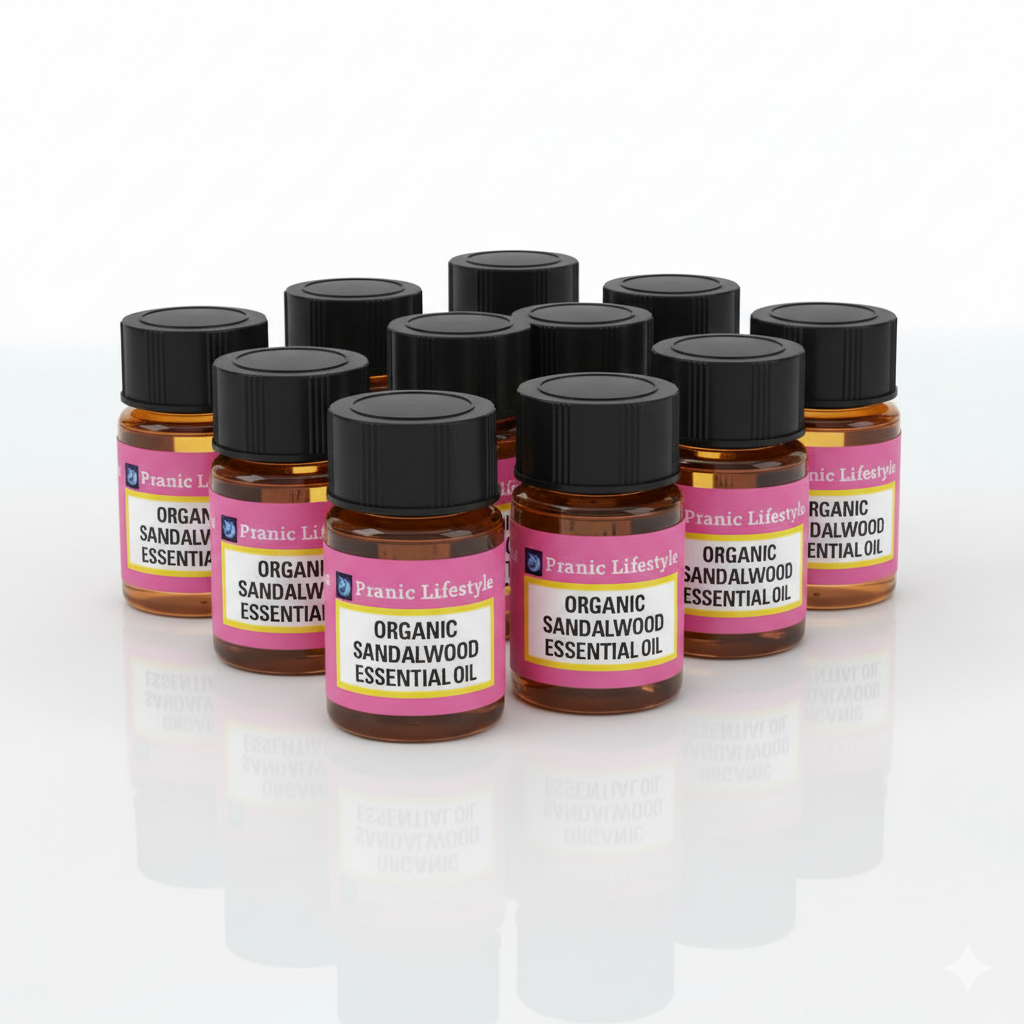
0.5 oz, 4 oz, 16 oz, and 12-pack cases for practitioners and retail
Why Pranic Lifestyle
The source matters
The Pranic Lifestyle line is the aromatherapy partner of the Pranic Healing community. Every bottle is single-origin and bottled in dark glass to protect the integrity of the plant essence. We work directly with the small Western Australian distillers who honor traditional steam distillation and ethical wild-crafting, and we maintain the full chain of custody from the harvest permit to your medicine cabinet.
- No carrier oil. No synthetic fragrance compounds. No fillers. No dilution of any kind.
- No blends. This is a single note. The whole plant. The complete aromatic profile of Santalum spicatum.
- Dark amber glass to protect against photo-degradation. Sandalwood is one of the more photolabile oils.
- Sourced from licensed Western Australian plantations and ethical Aboriginal community harvests.
Storage & Safety
Care and caution
Storage. Cool, dark, dry. Tightly sealed. Sandalwood is more stable than most oils (high in sesquiterpenes which oxidize slowly), but it still loses complexity with age, heat, and light. A bottle kept in a closed cabinet at room temperature will hold its full profile for 4-5 years.
Standard dilution for adults: 1-3% in a carrier oil, which is roughly 3-9 drops per fluid ounce of jojoba, fractionated coconut, or unscented lotion. For facial applications, 1% (about 2 drops per ounce of carrier) is sufficient.
Pregnancy and children. Do not use topically during pregnancy without the guidance of a qualified practitioner. Safe for diffusing. Keep bottles out of reach of children. Sandalwood is one of the gentler oils, but the farnesol component can be a skin irritant in sensitive individuals at higher concentrations.
Pets. Generally safe around dogs when diffused in moderation. Toxic to cats (cats lack the liver enzyme to metabolize most essential oils, including sandalwood). Diffuse in a separate room from cats or skip diffusion entirely in cat households.
Skin test. Apply one drop diluted in a teaspoon of jojoba to the inner forearm. Wait 24 hours. If no reaction, the oil is compatible with your skin.
Discontinue use if irritation occurs. Consult a qualified healthcare professional before use if you are pregnant, nursing, under medical care, or have a known respiratory or skin condition.
Frequently Asked Questions
What people ask
Is Pranic Lifestyle's Australian sandalwood oil pure?
Yes. Every bottle is 100% pure Santalum spicatum heartwood oil, steam-distilled, uncut, and unblended. No carrier oil, no synthetic fragrance compounds, no fillers, no dilution of any kind.
What is the salt-and-sandalwood basin that Master Choa recommended?
A foundational Pranic protocol for cleansing before meditation. Add three to five drops of pure sandalwood oil to a basin of warm water in which a generous handful of fine sea salt has been dissolved. Place the feet in the basin before Twin Hearts meditation or any pranic practice. The salt draws dirty energy downward through the feet; the sandalwood flushes the aura. The water is discarded after the session and not reused. This is the foundational Pranic practice involving sandalwood oil and the one Master Choa specifically recommended.
How do I know my sandalwood oil is real?
Two tests. First, the dry-down: real sandalwood develops new aromatic facets 15-30 minutes after application; synthetic sandalwood flattens. Second, the residue: real sandalwood leaves a transparent, pale-yellow film that dries clean; synthetic leaves a waxy shine.
What is the difference between Sandalwood oil and "Sandalwood fragrance oil"?
Sandalwood essential oil is steam-distilled from the heartwood of the Santalum tree. It contains the full sesquiterpene fraction that gives the oil its depth and its pranic frequency. "Sandalwood fragrance oil" is a synthetic mixture of laboratory-created molecules (often Javanol, Polysantol, or Ebanol) designed to smell like sandalwood. It is much cheaper, carries none of the biological activity, and none of the pranic frequency. Pranic Lifestyle sells the essential oil, not the fragrance.
Can I use this sandalwood oil on my skin every day?
Yes, at a 1-3% dilution in a carrier oil. Australian sandalwood is one of the gentler essential oils for daily facial application. The alpha-bisabolol and farnesol in the natural profile are both soothing. For mature skin, dry skin, or as part of a daily evening ritual, sandalwood has been used topically for centuries.
What are the pranic colorations of sandalwood?
Master Choa Kok Sui specifically taught that sandalwood carries green prana. Rocky Patel adds pink and gold prana in his own Pranic work, as conveyed on the Pranic Lifestyle YouTube channel. Sandalwood is applied to the soles of the feet, the heart chakra, and the crown. Master Choa described it as effective for dirty-prana cleansing and "very calming."
Where is the oil sourced?
Western Australia — specifically the semi-arid regions of Carnarvon, the Wheatbelt, and the Goldfields. We work only with licensed plantation operators (including Quintis and Santanol, the two largest sustainable suppliers) and ethical Aboriginal community harvests. Full chain of custody is maintained from the harvest permit to your medicine cabinet.
Do you ship internationally?
We ship within the United States and to select international destinations. Bulk case sizes (12-pack) save the most on per-bottle cost and are the standard for retail and practitioner use.
Australian Sandalwood
The Quiet Master
Santalum spicatum · Western Australia · Steam-distilled from heartwood
Long used in the Pranic Healing tradition and associated with the crown chakra. One single note, complete.
One-Time Investment
0.5 oz · ships in dark amber glass · praniclifestyle.com
Disclaimer: These statements have not been evaluated by the Food and Drug Administration. Nothing on this page is intended to diagnose, treat, cure, or prevent any disease. This product is intended for aromatic, spiritual, and educational purposes only. It is not a substitute for professional medical, psychological, or veterinary care. Results vary. Essential oils are not safe for cats. Always dilute appropriately. Consult a qualified professional before use if you are pregnant, nursing, or have a known medical condition. The information on this page reflects traditional use in the Pranic Healing lineage, established aromatherapy practice, and contemporary botanical research, and is provided for educational purposes. Pranic Lifestyle does not claim that essential oils diagnose, treat, cure, or prevent any medical condition. Where the Pranic tradition describes specific energetic or pranic effects of an oil, this is part of the lineage's experiential and spiritual framework and should be understood as such. Where modern research is cited, it is cited as research, not as a marketing claim.
© 2026 Pranic Lifestyle · Founded by Rocky Patel · praniclifestyle.com
Share