Pranic Lifestyle
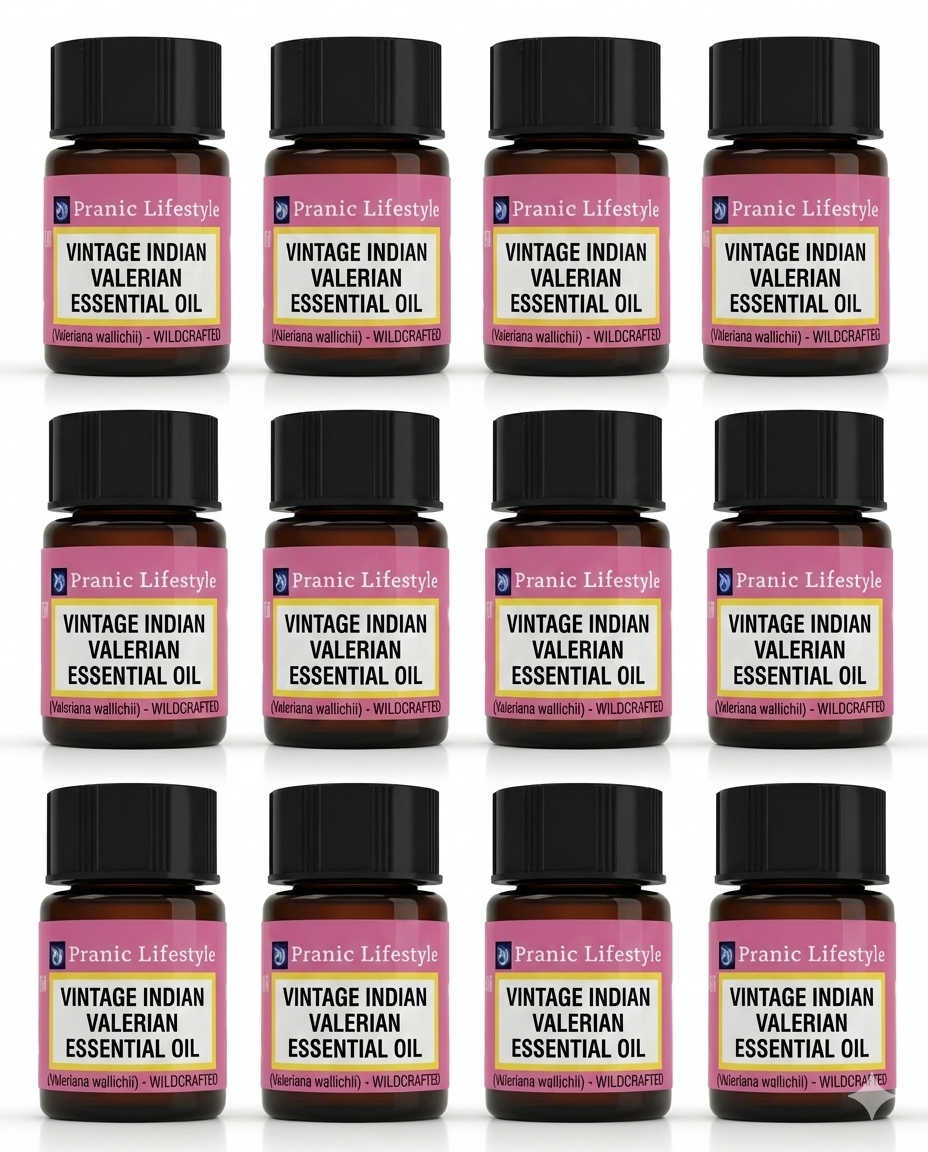
Vintage Indian Valerian (Tagara) Essential Oil - Wildcrafted
Couldn't load pickup availability
Valeriana wallichii — Indian Valerian (Tagara) | Steam-distilled | Origin: Nepal (wildcrafted, high-altitude)
Vintage distillation — aged root oil | Base note | GC/MS tested
Pranic color: Violet and blue prana | Chakras: Root · Crown · Ajna
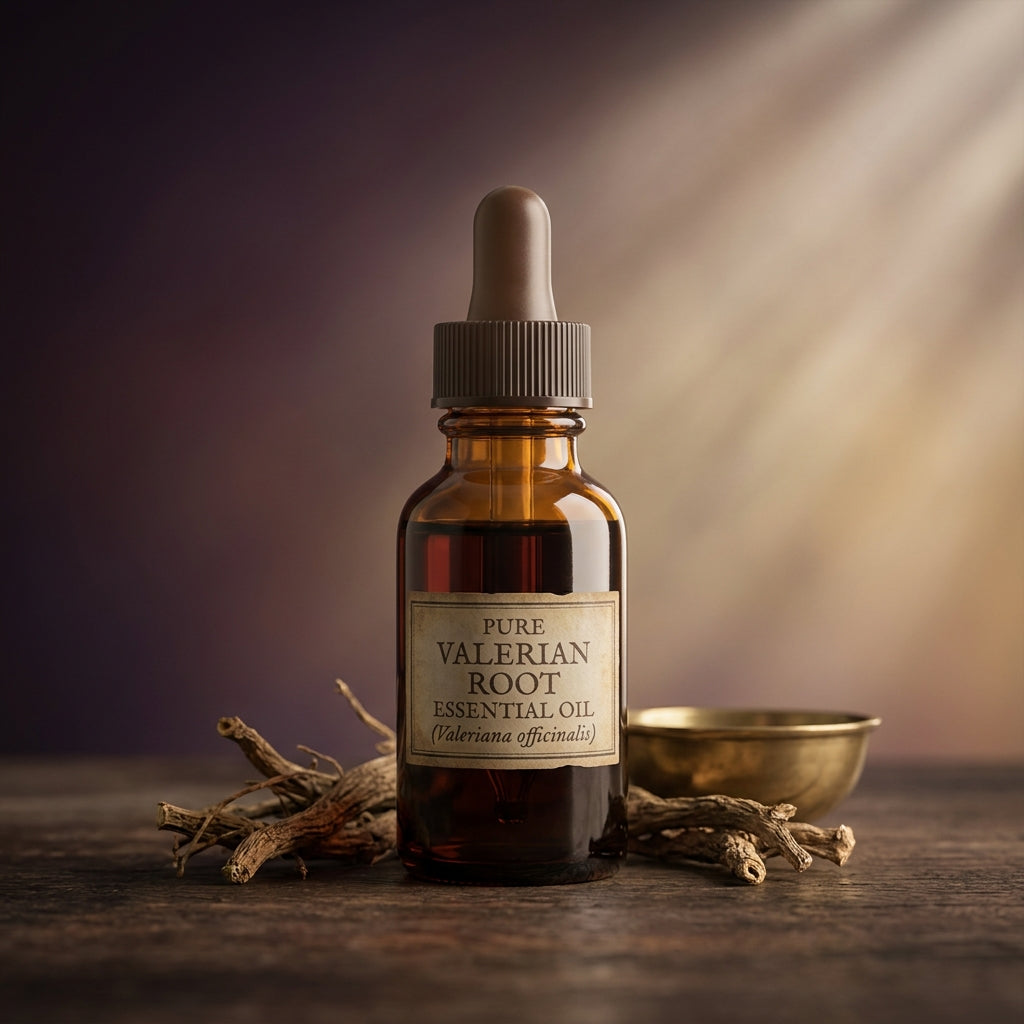
The mountains of Nepal hold a plant that Ayurvedic medicine has classified for 3,000 years as the primary sedative of the materia medica: Valeriana wallichii, known in Sanskrit as Tagara. This Indian Valerian is the elder sibling of the more commercially familiar European Valerian (Valeriana officinalis) — related in genus, different in character. Where European Valerian is pungent, almost cheesy in its sharpness (isovaleric acid dominance), Indian Valerian is earthier, muskier, and richer — a deep, complex base note that has been compared to aged wood, moist soil, and dried tobacco, with an underlying sweetness that emerges as the oil warms.
We carry a vintage distillation of this root oil. Root oils — valerian, vetiver, spikenard — are among the few essential oils that improve significantly with age. As the more volatile top-note compounds slowly evaporate from the stored oil, what remains is concentrated to a deeper, denser, more viscous expression of the root's character. This is not degraded oil; it is matured oil — the same principle that distinguishes a fine aged wine from the same variety harvested fresh.
Tagara in Ayurvedic Medicine: 3,000 Years of Sedative Science
The Charaka Samhita (ca. 600 BCE), one of the foundational Ayurvedic texts, lists Tagara among the primary nervines — herbs used to calm the nervous system, promote sleep, and resolve "vata imbalance" (the Ayurvedic category covering anxiety, scattered attention, insomnia, and nervous tension). The Ashtanga Hridayam (7th century CE) further classifies it as a medhya rasayana — a herb that supports the intellect while calming its agitation.
The key constituents driving these effects include valerianic acid and isovaleric acid (the characteristic pungent compounds, more prominent in the European species), valeranone (a sesquiterpene unique to the genus, associated with calming), β-ionone derivatives (woody, violet-like, depth-notes), patchouli alcohol analogs (earthy base persistence), and bornyl acetate (a cooling, slightly camphoraceous note that lifts the heavy earthiness). The interplay of these compounds produces an aromatic profile of remarkable complexity — heavy, grounding, and ancient-smelling in a way that invites stillness rather than demanding it.
Botanical Specification
| Parameter | Specification |
|---|---|
| Botanical name | Valeriana wallichii DC. (Indian Valerian, "Tagara") |
| Family | Caprifoliaceae / Valerianaceae |
| Origin | Nepal — wildcrafted, high-altitude (1,500–3,000 m elevation) |
| Extraction | Steam distillation of dried roots and rhizomes; vintage-aged distillate |
| Aroma profile | Deep earthy-musky, moist wood, dried tobacco, sweet leather, β-ionone violet undertone |
| Note | Base note — exceptional fixative; slows evaporation of top notes in blends |
| Key constituents | Valeranone, isovaleric acid, valerianic acid, bornyl acetate, β-ionone derivatives, patchouli alcohol analogs |
| vs European Valerian | V. wallichii: earthier, muskier, less pungent than V. officinalis; more β-ionone, less sharp isovaleric bite |
| Pranic color | Violet and blue prana (deep calming, grounding, spiritual stillness) |
| Primary chakras | Root (Muladhara — deep grounding), Crown (Sahasrara — stilling the mind for meditation) |
Pranic Energetic Profile: The Great Silencer
Ayurvedic philosophy classifies all of existence under three gunas — qualities of nature. Rajas is the quality of motion, agitation, and desire. Tamas is the quality of stillness, heaviness, and rest. Sattva is the quality of clarity, balance, and light. Most modern life operates in Rajasic overdrive. Tagara is the pre-eminent Tamasic botanical — it does not merely suggest rest; it creates the conditions of rest in the body and field before the conscious mind catches up.
In Pranic healing, the deep blue and violet frequencies associated with Tagara function differently from the active purifying action of peppermint or the energizing brightness of lemongrass. This is yin prana work — calming, settling, deepening. It is used not to activate chakras but to still the mental body before meditation, to ground scattered awareness, and to create the internal silence that genuine spiritual practice requires.
Ritual Applications
✦ Pre-Meditation Stillness Diffuser
1 drop Indian Valerian · 2 drops frankincense · 2 drops sandalwood
Diffuse 10 minutes before seated meditation practice. The vintage root earthiness combined with frankincense's vertical quality creates a deeply grounding aromatic field. Use sparingly — valerian's base note intensity is significant at higher doses.
✦ Sleep Transition Blend (1% dilution)
2 drops Indian Valerian · 4 drops lavender · 2 drops vetiver · 1 oz jojoba
Apply to soles of feet and back of neck 30 minutes before sleep. The valerian-vetiver combination provides maximum grounding; lavender bridges the gap to lighter, more accessible calming. This is the Tamasic anchor blend.
✦ Perfumery Fixative Use
1–2% in any blend as a base-note fixative
Indian Valerian's thick sesquiterpene content makes it an exceptional fragrance anchor — it dramatically slows the evaporation of top notes (citrus, mint) and adds an ancient, complex depth to blends. Used this way, 1–2% concentration adds character without making the blend smell primarily of valerian.
▶ FAQ — Indian Valerian Essential Oil
Why does Indian Valerian smell different from the valerian I've smelled before?
European Valerian (Valeriana officinalis) is the species found in most sleep supplements and Western aromatherapy. Its high isovaleric acid content gives it the famously sharp, cheese-like pungency that many people find difficult. Indian Valerian (Valeriana wallichii) has a lower isovaleric acid profile and a higher concentration of β-ionone derivatives and patchouli-type sesquiterpenes — the result is an earthier, muskier, more complex base note that most people find significantly more appealing as an aromatic tool.
What is a "vintage distillation" and is old oil safe?
Root oils are unusual in that they contain very few monoterpenes (the lightest, most oxidation-prone constituents). The compounds that remain after aging are heavy sesquiterpenes and sesquiterpene alcohols — stable molecules that don't oxidize quickly. Vintage distillation refers to oil that has been stored in sealed amber glass for a period of years, during which lighter top notes slowly evaporate and the remaining concentrate deepens. This is a quality enhancement, not degradation. A properly stored vintage root oil is both safe and more aromatically complex than fresh distillate.
Is this the same valerian as in sleep supplements?
Related but different. Valerian sleep supplements are typically water or alcohol extracts of European Valerian roots, standardized for valerenic acid content. The essential oil (from either species) contains different active fractions — primarily volatile sesquiterpenes and sesquiterpene acids. The mechanisms and dosing are completely different between oral supplementation and aromatic use. This product is for aromatic/external use only.
Does it work as a perfume fixative?
Yes — extremely well. At 1–2% in a blend, Indian Valerian's dense sesquiterpene content dramatically slows the evaporation of lighter top-note compounds (citrus oils, mint, aldehydes), extending the perceived life of the blend on skin and in diffusion. Perfumers use it similarly to vetiver and costus as an earthy-musky fixative with a distinctly ancient, Ayurvedic character.
Safety: Generally considered low-risk for topical and diffusion use when properly diluted. Not recommended during pregnancy. Avoid in combination with sedative medications (valerian compounds may potentiate CNS depressants). Do not use while operating machinery or driving. Dilute to 1–2% for topical use. Avoid use on children without professional guidance. The aroma is strongly persistent — avoid prolonged diffusion in closed spaces.
These statements have not been evaluated by the Food and Drug Administration. This product is not intended to diagnose, treat, cure, or prevent any disease. All energetic and aromatic protocols are for spiritual and educational purposes only. For external and aromatic use only. Perform a patch test before topical application.
Share